Burnout isn't just about feeling tired—it's an emotional, mental, and even physical depletion that leaves you disconnected from your own life. You love your kids, your work, your home, but when was the last time you felt truly alive?
Here's the thing: You don't have to live like this. You deserve to feel exhilarated by life again.
What Burnout Really Feels Like
If you're like over half of today's workforce, you're experiencing exhaustion or stress on a regular basis. But burnout goes deeper than just having a bad day or needing a vacation.
Burnout feels like:
- Waking up already exhausted, despite a full night's sleep
- Finding no joy in activities you once loved
- Feeling cynical about work or life responsibilities
- Struggling to concentrate or complete tasks
- A sense of failure or self-doubt that just won't quit
- Physical symptoms like headaches, stomach problems, or constant illness
"I'm just tired" doesn't begin to cover it. Burnout is when your internal battery isn't just drained—it seems incapable of holding a charge anymore.
The Three Dimensions of Burnout
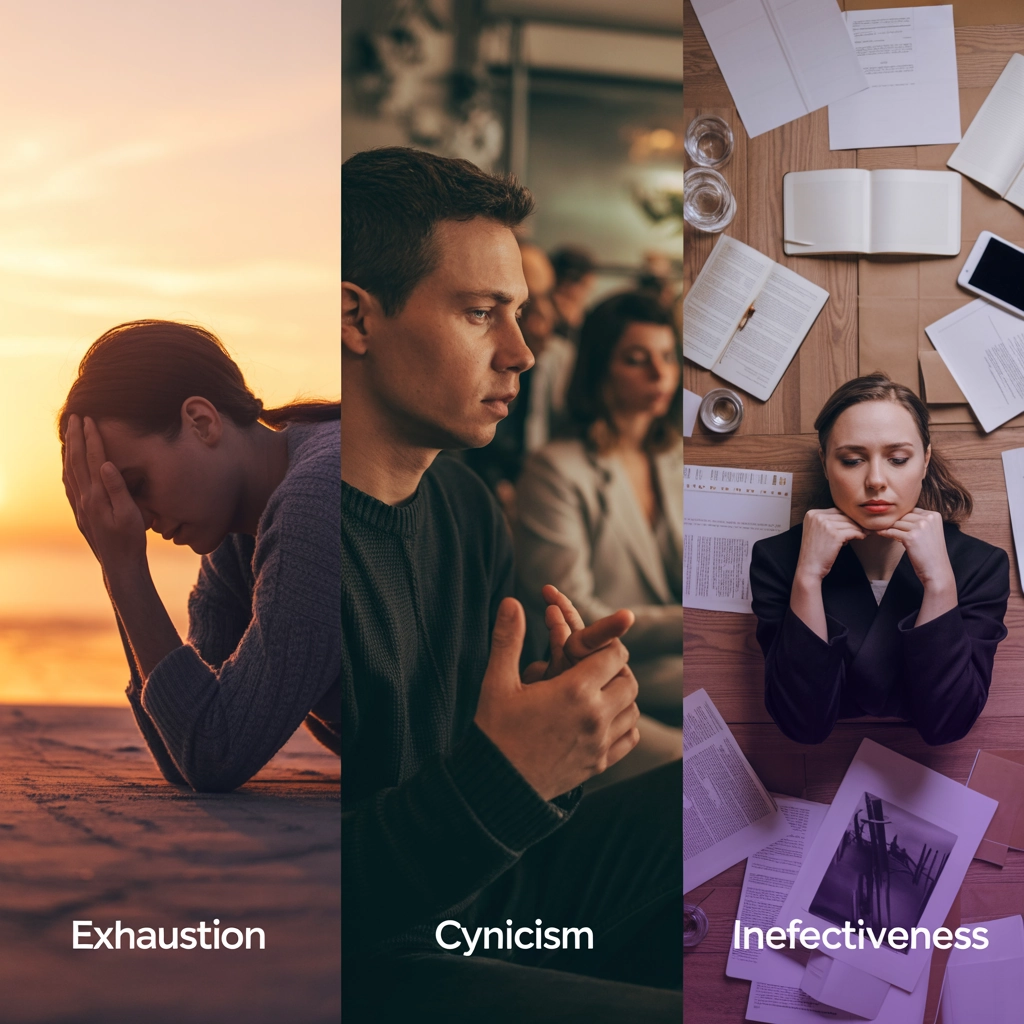
Researchers Christina Maslach and Michael Leiter identified three key components of burnout:
- Exhaustion – The fatigue that persists no matter how much you rest
- Cynicism – A growing detachment from your work and relationships
- Ineffectiveness – The crushing feeling that nothing you do makes a difference
These dimensions don't just affect your work life—they seep into everything. That's why addressing burnout requires more than just a weekend getaway or a bubble bath (though self-care certainly has its place).
The Myth: "It's Just Poor Time Management"
One of the most damaging misconceptions about burnout is that it's solely an individual problem—if you're burning out, you must be doing something wrong.
This victim-blaming approach ignores a crucial truth: burnout is often the result of systemic issues beyond an individual's control. While personal habits play a role, they're only part of the story.
The research is clear: organizational factors contribute significantly to burnout rates. These include:
- Unrealistic workloads and expectations
- Lack of autonomy or control over your work
- Insufficient recognition or reward
- Breakdown of community and support systems
- Perceived unfairness or inequity
- Misalignment between personal and organizational values
When we frame burnout as just a personal failure, we miss the opportunity to address the root causes.
The Warning Signs You Shouldn't Ignore
Burnout doesn't happen overnight. It's a slow burn that many of us dismiss until we're deep in the flames. Learning to recognize the early warning signs can help you intervene before reaching complete exhaustion.
Watch for these indicators:
- Increasing irritability or impatience with others
- Dreading the day ahead before it even begins
- Difficulty sleeping despite feeling exhausted
- Loss of motivation for activities you once enjoyed
- Turning to unhealthy coping mechanisms more frequently
- Withdrawing from social connections
- Feeling like you're just going through the motions
If several of these sound familiar, your body and mind may be trying to tell you something important.
The Truth: Burnout Reflects Misalignment
At its core, burnout often signals a fundamental mismatch between your needs and your current reality. This mismatch can occur in several critical areas:
- Workload mismatch: The demands exceed your capacity
- Control mismatch: You lack sufficient autonomy
- Reward mismatch: Recognition doesn't match your effort
- Community mismatch: You feel isolated or unsupported
- Fairness mismatch: You experience or witness inequity
- Values mismatch: Your personal values conflict with what's expected of you
Understanding which mismatches are present in your life is the first step toward meaningful change.

Breaking Free: A Holistic Approach to Recovery
Overcoming burnout requires more than quick fixes. True recovery involves addressing both personal and environmental factors. Here's a comprehensive approach:
1. Acknowledge the Reality
The first step is acknowledging that burnout is real and valid. Stop dismissing your exhaustion or comparing your capacity to others'. Your experience matters, and recognizing the problem is essential for healing.
2. Reset Your Boundaries
Burnout thrives when boundaries are weak or non-existent. Start by identifying where your limits need reinforcement:
- When do you need to say "no" more often?
- Where are you overextending yourself?
- What activities drain your energy without replenishing it?
- How can you create buffer zones between work and personal time?
Setting boundaries isn't selfish—it's necessary for sustainable performance and wellbeing.
3. Reconnect With Your Values
Burnout often occurs when we're living out of alignment with our core values. Take time to reflect:
- What matters most to you?
- Which activities feel meaningful and energizing?
- Where in your life do you feel most authentic?
- What would a life well-lived look like for you?
Use these insights to make intentional choices about where you invest your time and energy.
4. Rebuild Your Support System
Isolation intensifies burnout. Reconnecting with supportive relationships can be transformative:
- Who truly understands and accepts you?
- Which relationships leave you feeling energized rather than drained?
- Where can you be vulnerable without fear of judgment?
- How might you build community around shared interests or challenges?
Remember that asking for help is a sign of strength, not weakness.
5. Restore Your Physical Foundation
Your body and mind are interconnected. Addressing physical wellbeing supports emotional resilience:
- Prioritize sleep quality and consistency
- Move your body in ways that feel good
- Nourish yourself with foods that support energy and mood
- Consider how substances like caffeine, alcohol, or sugar might be affecting your energy patterns
- Create moments of genuine rest throughout your day
Small, consistent habits often make a bigger difference than dramatic changes.

The Role of Professional Support
While self-help strategies are valuable, sometimes professional guidance makes all the difference. Working with a coach or therapist can provide:
- Objective perspective on your situation
- Accountability for meaningful change
- Customized strategies based on your unique needs
- Safe space to process difficult emotions
- Expert guidance through the recovery process
At Empowered by Tiffany, we specialize in helping people move from burnout to renewed purpose and energy. Our approach isn't about pushing through or "hustling harder"—it's about creating sustainable success that honors your wellbeing.
Preventing Future Burnout: Building Resilience
Recovery is just the beginning. Building resilience helps protect against future burnout:
- Practice self-awareness: Regular check-ins with yourself help catch early warning signs
- Cultivate meaning: Connect regularly with activities that provide purpose and fulfillment
- Develop flexibility: Building adaptability helps you navigate challenges without depleting yourself
- Prioritize relationships: Strong connections buffer against stress and provide perspective
- Align your environment: When possible, shape your surroundings to support your wellbeing
Remember, resilience isn't about enduring more stress—it's about creating systems that support your thriving.
The Organizational Piece of the Puzzle
If you're in a leadership position, consider how you might contribute to a healthier environment:
- Model sustainable work practices
- Create realistic expectations and workloads
- Recognize and reward contributions meaningfully
- Foster a culture where people feel safe to speak up
- Align organizational goals with human wellbeing
- Provide resources for stress management and recovery
Organizations that address burnout proactively often see improvements in retention, creativity, and performance.
Your Invitation to Reclaim Your Energy
The truth about burnout is that it's not inevitable. Yes, it's common in our culture of constant productivity and connection, but you don't have to accept it as your normal.
You deserve to feel energized by your life, not depleted by it.
You deserve work that aligns with your values, not contradicts them.
You deserve relationships that fill you up, not drain you dry.
If you're ready to move beyond burnout toward genuine wellbeing, we're here to support your journey. At Empowered by Tiffany, we believe in your capacity to create meaningful change—and we'd be honored to walk alongside you as you reclaim your energy and purpose.
The first step? Simply acknowledging where you are today, without judgment. The next step is entirely up to you.
What small shift could you make today to move toward greater alignment and energy? Your future self will thank you for starting now.